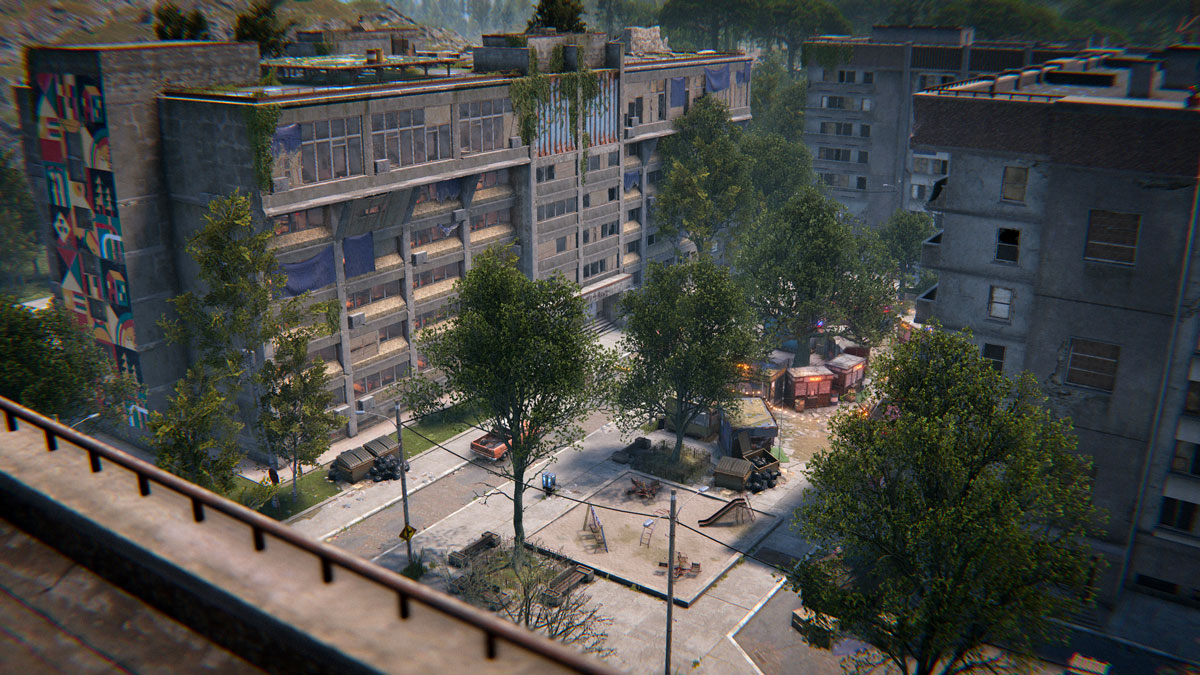
Rust Power Trip Update: Monuments Become Part of a Player-Maintained Power Grid
Rust's August 2026 update, Power Trip, connects several monuments through a new island-wide electrical network. Players can restore the Power Plant, supply the grid with Heavy Fuses and progressively activate new machinery, resources and events across the map.
The update also introduces the Satellite Crash event, crude oil production at the Dome, public electricity connections beside roads, functional garages, food freezers and major changes to recyclers. As usual, the monthly update is accompanied by a forced wipe.
However, the expression “forced wipe” is often misunderstood. It does not necessarily mean that every learned blueprint is deleted. This guide explains exactly what is reset, what server owners can control and how Rust's procedural maps are generated.
Player-maintained monuments change the entire island
The centrepiece of Power Trip is the new Player-Maintained Monument system. Several familiar locations are no longer isolated loot areas. They now form a connected infrastructure network controlled from the Power Plant.
Players must complete the existing Power Plant puzzle and insert the new Heavy Fuses into dedicated fuse banks. The more functioning fuses the server maintains, the higher the island's power stage becomes.
Heavy Fuses can be recovered from loot containers, including crates found around the world and inside Underwater Labs. Once inserted into the Power Plant, they cannot simply be removed and reused. Their condition gradually decreases, meaning the server community must continue supplying the grid.
The electrical network is shared by the whole server. A group activating the Power Plant can unlock services that benefit other players, but rival teams may also attempt to control the monument, use the infrastructure first or allow the fuses to expire.
The system creates a new form of server-wide progression. At the beginning of a wipe, the network is offline. As more Heavy Fuses are installed, additional functions become available at Power Plant, Launch Site, Airfield, Dome, Oil Rig, Water Treatment Plant, Oxum's Gas Station, Abandoned Supermarket and selected roadside locations.
| Power stage | Main services | Roadside electricity |
|---|---|---|
| Stage 0 | The network is offline and the new monument machinery is unavailable. | No public power output. |
| Stage 1 | Basic services become available at Airfield, Oxum's Gas Station, Power Plant, Supermarket and Water Treatment Plant. | Up to 12 power. |
| Stage 2 | Standard recyclers outside safe zones recover their full normal efficiency. | Up to 18 power. |
| Stage 3 | Oil Rig controls and the Dome crude oil pumps become operational. | Up to 24 power. |
| Stage 4 | The high-efficiency Power Plant recycler, Airfield Chinook call and Launch Site satellite event become available. | Up to 30 power. |
A new red recycler at Power Plant
Recyclers are directly affected by the island's power level. Standard green recyclers located outside safe zones initially operate at approximately 50% efficiency. Once the grid reaches the required stage, they return to their previous 60% efficiency.
Power Plant also receives a new red recycler inside its green-card area. It only operates when the island reaches its highest power stage, but offers a faster cycle and approximately 75% material efficiency.
This creates a valuable late-stage objective. Maintaining the power network does not only activate visual effects and machinery: it can provide a significant economic advantage to players recycling large quantities of components.
Public electricity beside the roads
Some roadside electrical poles now include climbable transformers. When the network is active, players can connect a Wire Tool and route electricity back to their base.
Each transformer offers several connections, with its total output scaling according to the island's current power stage. A fully powered network can provide up to 30 power, enough to support a small electrical installation without relying exclusively on solar panels, wind turbines or generators.
Building privilege is not required to create the initial connection at the pole. However, protection at the destination prevents another player from casually removing a cable connected to an authorised base.
A new Satellite Crash event at Launch Site
The most spectacular addition in Power Trip is the Satellite Crash event. Once the electrical network reaches its highest stage, players can access a new control station at Launch Site.
The terminal requires an Aiming Module and Tech Trash. It then displays several satellites, their payloads and their remaining thruster burns. Players can use those burns to adjust the projected crash location and reduce the size of the possible landing area.
This creates a deliberate risk-and-reward decision:
- spending more thruster fuel makes the crash location easier to control;
- preserving fuel makes the satellite's recoverable thruster components more valuable;
- choosing a convenient location may reduce travel time but also make the event easier for rivals to contest.
After the target is confirmed, the satellite takes approximately ten minutes to descend. Its impact is visible and audible across a large area, giving other players time to prepare an ambush or race towards the wreckage.
The resulting crates remain too hot to open immediately, while the main wreck is surrounded by dangerous radiation. Players therefore need radiation protection and enough equipment to defend the site.
Possible rewards include High Quality Metal, Tech Trash, CCTV Cameras, Targeting Computers, turret components and additional Aiming Modules. The wreckage also contains recyclable Thruster Modules whose value depends partly on how much fuel was preserved before impact.
Triggering the event does not guarantee ownership of the loot. Like the Patrol Helicopter or an airdrop, the satellite becomes a public point of conflict once it crosses the sky and crashes.
Dome, Oil Rig, Airfield and other monuments gain new functions
The electrical network reaches far beyond Power Plant and Launch Site. Several monuments receive new machinery or services, encouraging players to travel across the island rather than controlling a single location.
Dome and Oil Rig
Switches inside the Oil Rig puzzle areas can activate crude oil production at the Dome. Tanker vehicle modules can then be filled through the new pumps.
Airfield
New terminals can temporarily increase natural supply-drop activity or call a Chinook to Airfield when sufficient power is available.
Water Treatment Plant
Players can activate valves and generate pressure, supplying clean water to temporary roadside water stations around the map.
Oxum's Gas Station
The garage receives functional shutters and a modular vehicle lift, powered by the grid or by a local Small Generator.
Abandoned Supermarket
Powered freezers periodically provide food while the electrical network is active.
Power Plant
The monument becomes the strategic centre of the island, controlling the grid and offering bonus loot and the new red recycler.
Producing crude oil at the Dome
The Dome's spherical tank now contains working crude oil pumps. Before they can be used, players must activate the relevant controls at Small Oil Rig or Large Oil Rig while the island is sufficiently powered.
A modular vehicle equipped with a tanker module can be connected to the pumps using the Hose Tool. The stored crude oil must then be extracted while the vehicle is positioned on a compatible car lift.
This gives modular vehicles and tanker modules a much more important role. A complete production run may involve Power Plant, an offshore Oil Rig, the Dome and a vehicle lift, creating multiple opportunities for interception.
Airfield supply controls
Airfield receives two chargeable terminals. The first can increase the frequency of naturally occurring supply drops for a limited period. The second, available at the highest power stage, can call a Chinook directly to Airfield.
Both systems require electricity and their own fuses. Because they share a limited power supply, players may have to choose which terminal to prioritise.
Important balance and quality-of-life changes
Power Trip also introduces several balancing changes that server communities should take into account.
- High External Walls and Gates now contribute to upkeep when connected to a nearby building, increasing the running cost of large compounds.
- The Auto Turret crafting cost increases from 10 to 25 High Quality Metal.
- The Catapult reload time increases from three to six seconds.
- AK rifles found as loot once again contain four Rifle Bullets.
- Resource nodes can no longer spawn inside safe zones.
- Workbench recycle-bin upgrades gain a dedicated container for returned crafting materials.
- Beds and sleeping bags can be favourited and one spawn point can be displayed on the compass.
- Equipped shields can remain strapped to the player's back instead of always being held.
- Rust+ camera resolution is increased, while sensitive map and event information is reduced.
Navmesh generation and several low-level server systems have also been optimised. These changes are intended to improve map generation, memory handling and NPC navigation, although the real impact will depend on server population, map size and installed modifications.
New premium creative content
The update is accompanied by the Bar Games Pack, featuring a playable pool table, darts, a jukebox, stools, a mini fridge and bar-themed decorations.
A separate Stone Sculpture item allows players to create three-dimensional artwork through a dedicated sculpting interface. These premium items are optional and do not prevent players from accessing the main Power Trip gameplay systems.
What does a forced wipe actually mean in Rust?
A forced wipe happens when Facepunch releases Rust's main monthly update, normally on the first Thursday of the month.
The update changes the game's server protocol. Existing server save files become incompatible with the new version, forcing every updated server to create a fresh world save.
Map wipe
Deletes the active world save, including buildings, inventories, deployables, vehicles, sleeping bodies and the current state of the map.
Blueprint wipe
Separately deletes the crafting recipes learned by players. It is not automatically included in every map wipe.
Forced wipe
A mandatory map reset caused by the monthly game update and protocol change.
The August 2026 update forces a map wipe, but no universal blueprint wipe has been announced for Power Trip. Individual official, community or modded servers may still choose to reset blueprints according to their own wipe policy.
Can a server administrator prevent the forced wipe?
Not while keeping the server safely updated and accessible to players using the current Rust client.
An administrator could temporarily remain on an older server build, but players whose game has already updated would generally be unable to connect. More importantly, renaming or manipulating an old save file to bypass the protocol change is not considered a safe solution and can cause corrupted or incompatible world data.
For practical purposes, the monthly forced map wipe is therefore mandatory. Server owners can decide how and when to prepare for it, but they cannot continue using the old world save on the new protocol.
What exactly disappears?
A map wipe removes the current playable world and everything stored inside that world:
- player bases and external compounds;
- items stored in boxes, Tool Cupboards and player inventories;
- deployed objects, traps, electrical systems and industrial networks;
- vehicles, horses and boats owned or used by players;
- sleeping bags, beds and world spawn points;
- the current state of monuments, loot containers and environmental entities.
Steam ownership, purchased skins, account identity and permanent cosmetic content are not deleted by a map wipe.
How blueprints work and when they are reset
In Rust, a blueprint represents a learned crafting recipe. Learning the blueprint for an item allows the player to craft it when the required workbench and resources are available.
Blueprints can be unlocked through the Tech Tree or by researching an item at a Research Table. They are stored separately from the map save in the server's player blueprint database.
This separation explains why a player can join a freshly map-wiped server and still know how to craft weapons, ammunition, armour or electrical equipment learned during the previous wipe.
Map wipe only: the world starts again, but learned recipes remain.
Map and blueprint wipe: the world and learned crafting progression both start again.
Following Rust's progression rework, Workbench Level 2 and Workbench Level 3 also require Basic and Advanced Blueprint Fragments. These fragments are collected through monument puzzles, airdrops and higher-level loot.
A blueprint wipe does not remove the game's basic default recipes, but it forces players to rebuild their research and Tech Tree progression. Groups can no longer immediately craft advanced equipment simply because they learned it several months earlier.
Who decides whether blueprints are wiped?
There are two possibilities:
- Facepunch announces a global blueprint wipe. This is uncommon and usually accompanies a significant progression or data change.
- The server owner chooses a blueprint wipe. Community and modded servers can reset their blueprint database according to weekly, biweekly, monthly or custom rules.
Players should always read the server description or community announcement before a wipe. Two servers can both advertise a “monthly wipe” while using different blueprint policies.
How Rust's procedural maps, seeds and world sizes work
Most Rust servers use a procedurally generated map. Instead of manually designing every road, biome and monument, the server generates the world from a set of parameters.
The three main parameters are:
- map type: normally ;
- world size: the dimensions of the generated terrain;
- seed: the number used by the generation algorithm.
The seed is not the map itself. It is a numerical starting value used by the generator to determine terrain, roads, biomes and monument placement.
Will the same seed generate the same map?
Yes, provided the server uses the same world size, map type, generation settings and compatible game version. Under those conditions, the same seed should reproduce the same basic procedural world.
A server owner can therefore reuse the previous wipe's seed. The terrain and monument layout may remain familiar, but every player construction, inventory and deployable will still be erased because the world save has been recreated.
Why can the same seed sometimes produce a different map?
Rust's procedural generation system evolves over time. Facepunch can change monument requirements, roads, railways, biomes, topology rules or the underlying generation algorithm.
When one of those systems changes, an old seed may no longer create exactly the same result after an update. The seed has not changed, but the algorithm interpreting it has.
Server owners can also apply custom procedural-generation settings, such as disabling certain roads, power lines, rivers or monuments. Changing those options will naturally alter the generated world.
World size also matters
The same seed used with two different world sizes will not create the same map. World size influences available terrain, monument placement and server resource requirements.
Larger worlds provide more space for communities and monuments but require more memory, storage and processing power. Smaller maps create more frequent player encounters but may not have room for every large monument.
Procedural maps are different from custom maps
A custom map is created or edited in advance and downloaded by the server from a dedicated file. It is not regenerated from a normal seed and world-size combination.
Custom-map administrators must check compatibility carefully after major updates. A new monument system may require the map creator to add or update specific prefabs before every Power Trip feature can function correctly.
How server administrators should prepare for Power Trip
The August update changes monuments, world infrastructure, balancing and server-side systems. Administrators should prepare before reopening their community.
- Back up the server identity folder, including configuration, blueprint data and previous saves.
- Record the current seed and world size if the community may want to reuse the same procedural layout.
- Choose whether blueprints will be preserved or reset and announce that decision clearly.
- Install the latest Rust server build before generating the new world.
- Update the server's modding framework and plugins before allowing players to reconnect.
- Verify custom maps and monument-related plugins, especially modifications affecting Power Plant, Launch Site, Dome or Oil Rig.
- Check that the new power infrastructure has generated correctly on the chosen map.
- Communicate the wipe time, seed policy and blueprint policy through the server description, website or Discord.
A backup remains useful for configuration and reference, but it does not make the old world save compatible with the new protocol. Administrators should not promise that bases or inventories can be restored after the forced wipe.
A more connected and contested Rust island
Power Trip is more than a collection of new monument puzzles. Its electrical network connects objectives that were previously independent and encourages players to move between Power Plant, Launch Site, Dome, Oil Rig, Airfield and roadside infrastructure.
The result should be a more dynamic wipe. Restoring the grid can benefit the entire island, but the most valuable services remain exposed to competition. The best recycler, crude oil production, public electricity and Satellite Crash event all depend on players maintaining and contesting the same shared infrastructure.
For server administrators, the most important distinction remains simple: the August forced wipe resets the map, but blueprints are only deleted when Facepunch or the individual server explicitly decides to wipe them.
Administrators may reuse the same seed, generate a completely new procedural world or load a compatible custom map. In every case, the updated server begins with a fresh world save and no surviving player bases.
Prepare your Rust server for the Power Trip update
Deploy and manage your Rust community through the VeryGames control panel, with automatic updates, backups, DDoS protection, plugin support and flexible DediGames® Box resources.